
Mapleton Water Woes
The Mapleton Water District is in need of more than $25 million to fix its aging water system.

Written and photographed by Will Yurman
We all get old. Even, or especially, 70-year-old asbestos cement pipe.
Mapleton’s water system of 11 miles of pipe has been facing a slow-motion disaster as it moves well past retirement age. And the price tag to fix the system is more than $25 million.
The Mapleton Water District was established in 1951. Much of the funding and work to build the system was paid for and supplied by a local sawmill. The cost to residents at the time was $3.50 per month.
In 1974, a landslide destroyed the intake and water plant. The district passed its first bond measure to rebuild, and rates were raised to $8 per month to help cover the cost.
Outages and boil water orders have plagued the district for years. In 2019, many of the mechanical water meters began to malfunction. The failure of the water meters undermined confidence in the water board and in the system, water board member Art Donnelly said. The meters weren’t giving reliable readings, “and people’s bills went crazy.”
A year later, the Swiss Creek Fire south of Mapleton pushed the local water system beyond its limits. “A series of miscalculations during the middle of a crisis led to a straw that broke the camel’s back,” Donnelly, the board’s current vice-president, said, picking his words carefully.
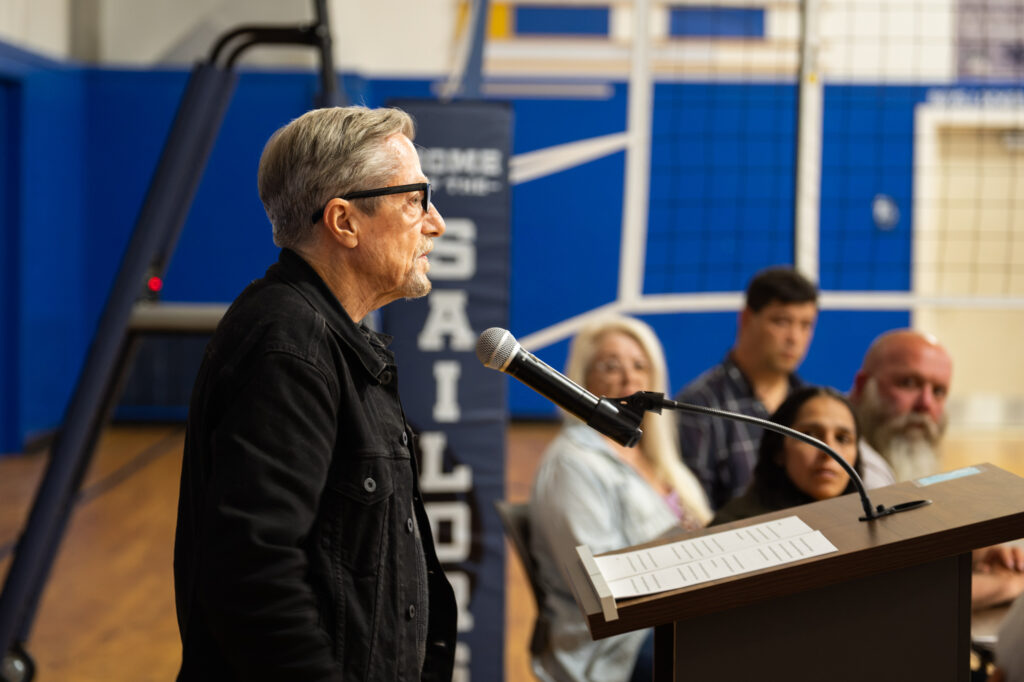
Some blamed the general manager, but ultimately, he said, the cause was an aging system and a community too small to afford the costs of maintaining it. The fire triggered a series of events that took down the water treatment plant and caused a break in one of the water mains.
It was months before people in the community had reliable water again.
“We were locked into that. On like a Groundhog Day kind of repeat cycle,” Donnelly said. Things would be fine for a few months, and then something would go wrong, a part would fail, “and then boom, we’d be out of water again for days or weeks or a month.”
There was always a specific cause behind any one of those events. “But really, really what it all came down to was one thing. The system is old,” he said.
Mapleton is a small, unincorporated community along the Siuslaw River, about 17 miles east of Florence. The census puts its population at around 500 people. There is no city government, no mayor or city council to turn to. The Mapleton Water District is what is known as a special district, a type of local government created to serve a specific purpose — run the water system.
There are more than 1,000 special districts in Oregon, according to the Special Districts Association of Oregon. These include library, fire, cemetery, port, parks, and water districts throughout the state.
The Mapleton Water District has around 260 customer hookups. The average monthly water bill has risen from $32 pre 2019, to about $110 today.
The water board held a “town hall” meeting on October 12 in what Donnelly called a Hail Mary attempt to build community support and engagement. At 6 p.m. in the Mapleton High School gymnasium, rows of folding chairs and tables filled half the gym floor. Students from the high school provided the food, including chili and a baked potato bar.
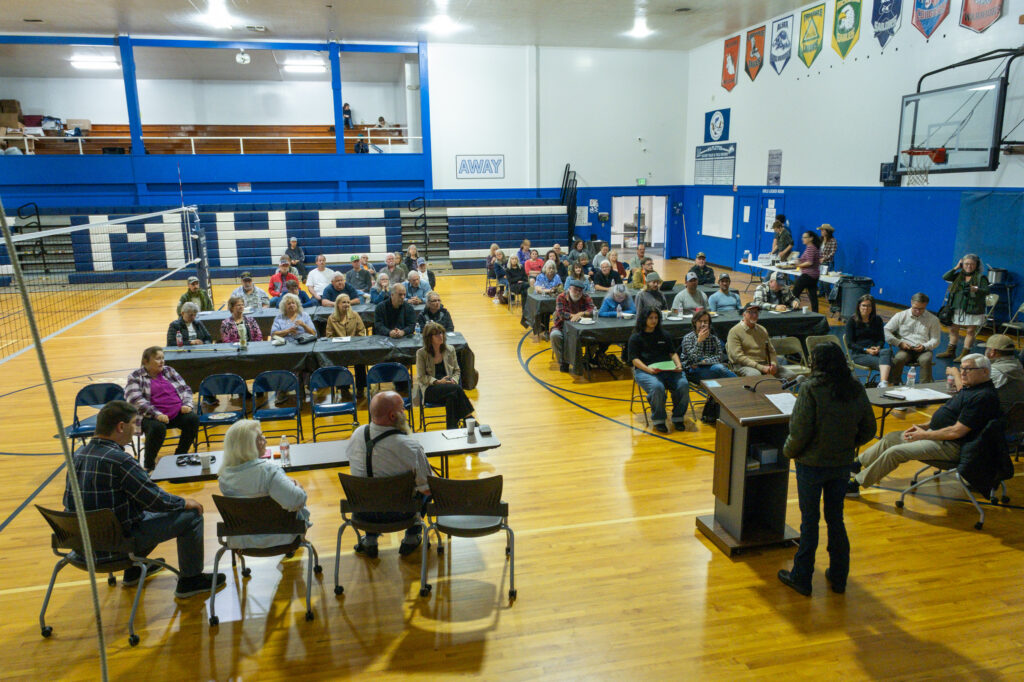
It was a cordial crowd, mostly. About 50 people showed up to hear from the board, Lane County Commissioner Ryan Cenega, and State Representative Boomer Wright. Most of the conversation focused on community involvement. The board made a plea for volunteers. The message was that the board can’t solve this problem alone. They need volunteers to clean up around the plant, update the website, help look for grants, and most importantly be involved and stay engaged. Four of the five seats on the board will expire next year, and the district has struggled in the past to find board members, Donnelly said.
But Donnelly, as one of the five board members, also gave the clear message. This will be an expensive fix.
A 2024 Water System Master Plan study put the price at over $25 million. In 2025, the district assumed ownership of the local sewer system, which needs more than $1 million in repairs.
The good news from Donnelly is that there are grants available. The bad news is that there aren’t as many as there once were. And the worse news is that almost all grants now require the local government to match at least 20% of the amount, and often as much as 50% of the grant.
“I can apply for dozens of grants, Donnelly said, but “God forbid, that we got them all right now, because we wouldn’t be able to afford the match.” Those costs will be passed on to the community, and that shouldn’t be a decision made by a few people on the water board. “That’s a recipe for public outrage,” he said. What happens when I come back to the community and say, “Hurray, I just got us $5 million. And by the way, you’re now on the hook for a million of it”?
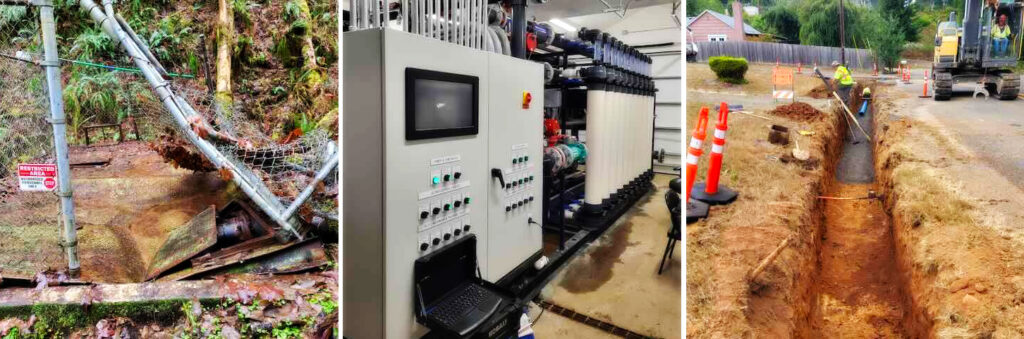
The district has received some money from grants and the federal government. Oregon Sen. Jeff Merkley got the district $800,000 in 2022, Donnelly said. But the wheels of government turn slowly, and it took two years for the money to reach the district, and that work is just now being done.
Rep. Val Hoyle got the district $925,000 last year. It will be used to refurbish two 300,000-gallon water storage tanks.
This kind of funding chips away at the work, but can’t, by itself, solve the $25 million question.
Back at the meeting in the school gym, one resident rose, angry. Angry about what he sees as mismanagement in the district. Mismanagement that he believes will lead to more water outages this winter. What happens to the value of his house, to everyone’s property value, if there isn’t reliable water? he asked.
Lucas Stang and Lauren Hesse have lived in Mapleton for 20 years. They believe the water district was mismanaged, but are supportive of the current board. But they don’t believe the community can pay much more for water. “It’s really not fair because some folks are just getting by here,” Stang said.

“I think the goal of this meeting is to inform everybody that this is our water district, and we want to all be involved. And nobody’s trying to do anything wrong. It’s just hard,” Hesse said.
John Walker, who would turn 75 a few days after the meeting, traces his Mapleton roots back four generations. As a contractor, he has worked on repairs to the system, and his wife Karen’s father “used to be one of the water guys,” he said. And now, their son Jordan Walker is the district’s office manager — the district’s only full-time employee.
They came to learn more; their son is tight-lipped, they said. Smarter than a whip, but he doesn’t say much, his dad said. They are concerned for Mapleton, and for their son, who they say is working seven days a week.
This is not just a Mapleton issue, Donnelly said. “We’re representative of a problem that’s going on all over the district, all over the state, all over the country.” Infrastructure across the country is reaching or has passed its expected lifespan.
The American Society of Civil Engineers (ASCE) gave the country’s infrastructure a grade of C in its 2025 report, and gave water supplies a C-. “ASCE projects a $3.7 trillion gap between current planned infrastructure investments and what must be done to have the nation’s infrastructure in good working order,” the report stated.
The fix seems obvious to Donnelly. “You would invest in America. You would invest in the infrastructure that underpins the economic activity that puts money in all of our pockets. Period.”
Until that happens, or the community finds a way to pay the $25 million price tag, the district will continue to make fixes where it can to keep the water moving.
“It’s a ticking time bomb. So we’re going to have more major problems,” Art Donnelly said. “The thing is, we just can’t predict exactly when.”