
The Charter looks to September
Discover the latest breakthroughs, ethical considerations, and societal implications as we navigate this exciting journey…
Written and photographed by Will Yurman
CORRECTION: An earlier version of this story said that Hillsdale College provided the charter with some of its curriculum. The story has been corrected to show that Hillsdale College is the publisher of the Literacy Essentials curriculum and that the charter school purchased the curriculum from the college; it was not provided to them.
The Whitmore Classical Academy’s first day of school is two months away.
As of last week, the school building looked a bit like a giant Erector Set. The bones of what the school will become. There will be about 80 students in this first year, shy of the school’s early goal of at least 100 students, but enough to fill four classrooms. And the school’s Instructional Principal Dr. Angelina McKinsey said she has met with almost every student and their families.
THE BUILDING
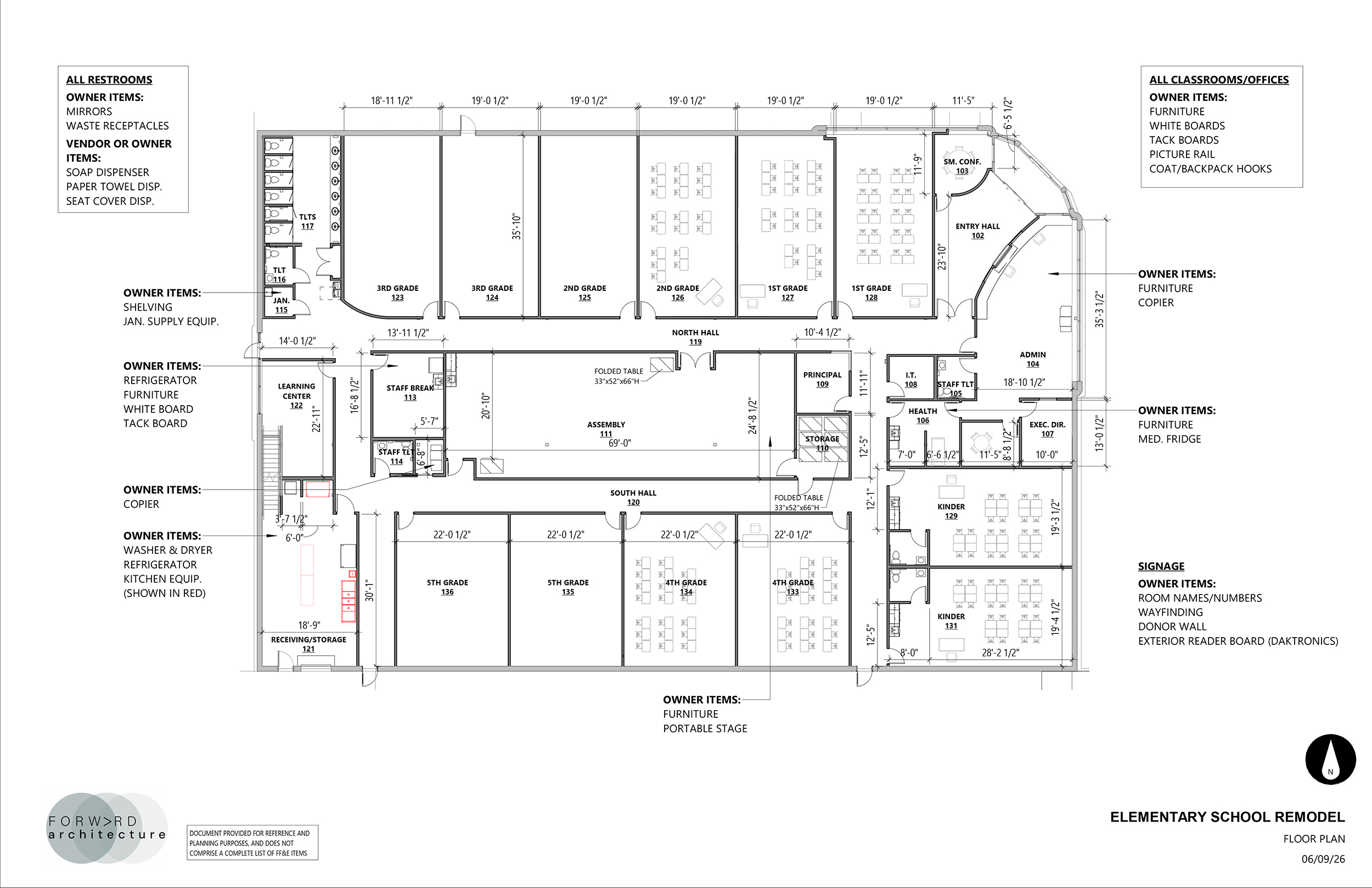
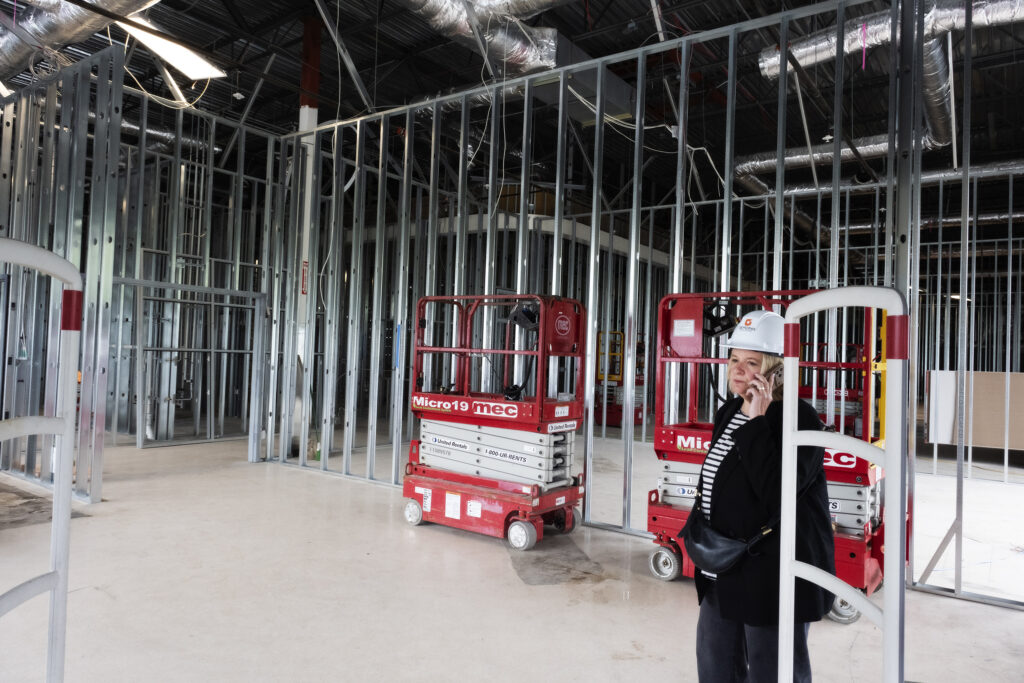
Twelve classrooms are framed in, though only four will be used for classes in this first year. Furniture is on order, the roof is scheduled to be replaced, all on schedule, according to Executive Director Jennifer Waggoner.
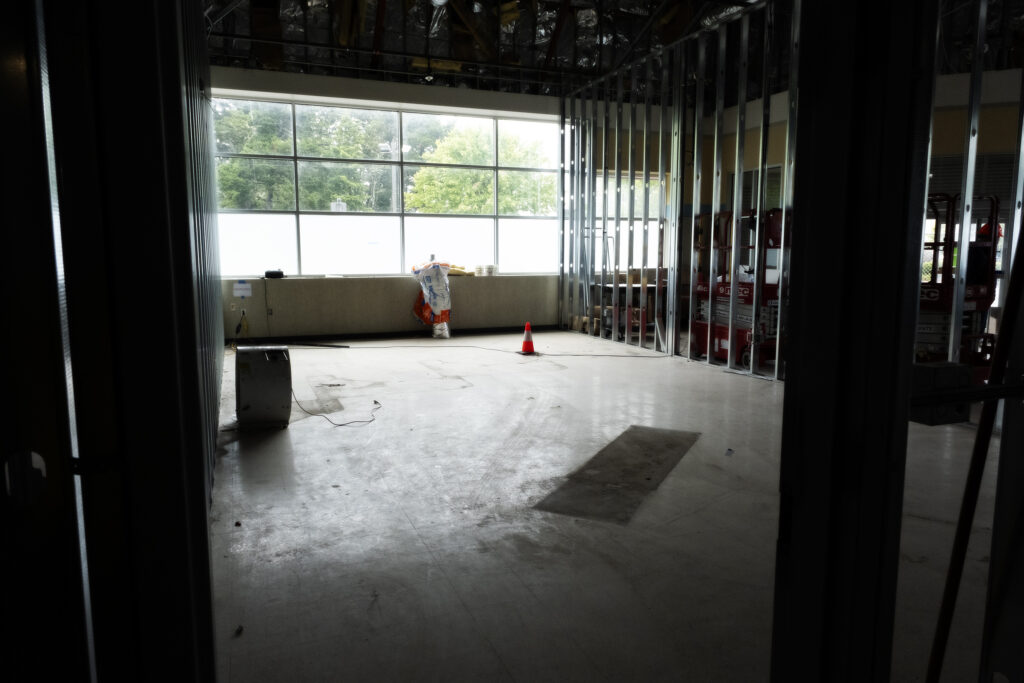
The former Rite Aid on Route 101 was stripped down to its outer walls. The 12 classrooms and a large meeting room anchor the space. Classrooms are located along the outer walls of the building, though not all will have windows.
The original plan called for cutting new windows into the former drugstore, but that plan was put on hold to save money. The center of the building will be a large multi-purpose “gathering room” that will serve as the cafeteria, gym and meeting room.
The goal is to have the building ready by September 1, Waggoner said, a week ahead of the first day of school.
STUDENT BODY
As of June 26, 78 students were enrolled for the fall in grades K-3, divided nearly evenly between the four grades.
McKinsey has been meeting with the incoming students and their families. The meetings have given her a chance to assess students and to introduce their families to the school’s expectations, she said.
About 2/3 of the students are from the Siuslaw School District, while the rest are either homeschooled or are from outside the district. Most of them are below grade-level academically, McKinsey said. “I would say the majority of our students need to focus on literacy skills.”
The how-to for that is framed by the school’s guiding principles of a classical education and a set of virtues: perseverance, respect, courage, integrity, gratitude, curiosity and self-control.
The definition of a classical education is often in the eye of the beholder. It is sometimes described as a return to traditional European education, with a reliance on the Western canons.
Hillsdale College, which publishes the Literacy Essentials curriculum, defines classical education as “the pursuit of wisdom through a cultivation of intellectual virtue and an encouragement of moral virtue by means of a rich and ordered course of study, grounded in the liberal arts…and yielding informed self-rule and a well-ordered understanding of human nature, the cosmos, and God.” The charter school is purchasing the Literacy Essentials curriculum from Hillsdale College; it is just one of several curricula the school will use.
Waggoner and McKinsey defined it more simply. “Classical is truly traditional teaching. We’re learning art. We’re learning math, we’re learning how to read, we’re learning science, we’re learning tribal history. We’re learning all the subjects through literacy, through listening, speaking, reading and writing,” McKinsey said.
Attendance will be a priority from the start. The school district struggles with chronic absenteeism. An end-of-year report (page 15) showed that 27% of elementary school students were chronically absent, though on any given day, the school reported nearly a 92% attendance rate.
Chronic absenteeism is defined as a student missing more than 10% of the school days in a year, Superintendent Andy Grzeskowiak said in an email. That translates to 17 or more absences for the five-day-a-week district during the school year.
There are four broad reasons for chronic poor attendance, according to the ODE website.
Barriers — can include family trauma or ongoing issues such as poor transportation, housing or food insecurities.
Aversions — things like social anxiety and academic and behavioral struggles.
Disengagement — could mean not seeing a connection between attendance and positive outcomes or feeling bored.
Misconceptions — can mean thinking attendance only matters in the older grades or that a student doesn’t need to be in school to succeed.
The charter school wants 100% attendance every day. “However, I do understand life happens, and 97% is our minimum expectation,” McKinsey said. The charter will use a merit system, acknowledging students with perfect attendance at the end of each quarter and at the year-end awards ceremony as a way to motivate students to attend, she said.
Setting expectations from the start and creating a classroom experience that is fun, where kids both want to be and are afraid of missing out, is the key to high attendance rates, Waggoner said. “It’s kind of a double whammy of, oh, gosh, I’m going to miss out. And oh, I don’t want to miss it because it’s fun,” she said.
The charter school will be both rigorous and fun, McKinsey said, while also teaching the school’s key virtues. “It goes a step farther where they’re not only just knowing how to say the word, recite what it means. They are demonstrating.” For the virtue of perseverance, for example, that could mean pushing students to solve a math problem, even if they are frustrated, she said.
The school will operate on a four-day week, Monday to Thursday, from 8 a.m. to 3:15 p.m. each day. Fridays will be optional and offer opportunities for both remediation and acceleration, as well as extracurricular activities.
The engine that drives all of this is the teacher-led classroom, Waggoner and McKinsey said. Teachers are empowered to use their own ideas to teach the state-mandated standards, with the supervision of McKinsey as instructional principal.
“Teacher-led means, okay, they need to make sure they’re learning everything that we’re required to teach, but they get to do it in a teacher-led way. They get to be creative using the curriculum,” McKinsey said.
FUNDING
The charter school is a public school. It is free to attend and open to anyone. They receive funding from the state in the same way the Siuslaw School District is funded. The state sets a per-student funding amount. (It’s a bit more complicated than that, as all state formulas are, but this is the essence of how it works.) For 26-27, the charter will receive just over $10,400 per enrolled student, a little more than $832,000 if it maintains 80 students over the course of the school year.
In addition, the school relies on donations. Some are in goods and services. Commercial refrigerators were donated, and someone is building cabinets for the front office, Waggoner said by way of example.
According to their May 2026 financial statement, the school received just over $1.5 million in donations from July 1, 2025 through May 31, 2026, and more than $400,000 in donations in the previous fiscal year.
Fundraising and donations will continue to be a large part of the school’s finances and help fill the gap between what they receive from the state and the costs of running and maintaining the school, Waggoner said. “In our research with other charter schools, grants and fundraising are such a huge part of that budget.”
STATUS OF COMPLAINTS
Complaints were filed by two local residents with the Oregon Department of Education earlier this year and are still pending. Both relate to concerns over religious entanglement, and one mentions the school’s curriculum as a concern. The ODE has not updated the status of either complaint on its website or responded to emails regarding their status.
THE FIRST YEAR
September 8, 2026 will be the first day of school. Students, staff and faculty will come together in the gathering room — the multipurpose room in the center of the school. Then students will head to their classrooms, where teachers will start the process of setting expectations, McKinsey said.
School will be a “four-day rigorous instruction week,” Waggoner said. They expect students to be engaged. To have fun. To persevere. And to attend.
And they expect results — which ultimately will be measured at least in part by test scores. Both the district and the charter school will be using the same testing system, I-Ready. This is part of the State’s new rules on accountability, outlined in Senate Bill 141, signed into law last June.
Students will be tested three times during the year, and by using the same system, it will be possible to compare the district’s results with the charter’s.
“It’s not about who is better than who. We’re here for kids. We want to make sure all of our students are doing their best, and maybe there’s stuff we can learn from each other,” McKinsey said.