
Declining Enrollment a Problem for the Siuslaw Schools
Discover the latest breakthroughs, ethical considerations, and societal implications as we navigate this exciting journey…
Written and photographed by Will Yurman
It’s been a tough year financially for the Siuslaw School District.
In May, voters defeated a bond measure to build a new high school. And in June, the school board voted to cut $2.4 million from the 26-27 budget as a first step toward eliminating an anticipated $4.2 million long-term deficit.
All of this, while student enrollment has fallen and is likely to continue to drop, district Superintendent Andy Grzeskowiak said in an interview last week.
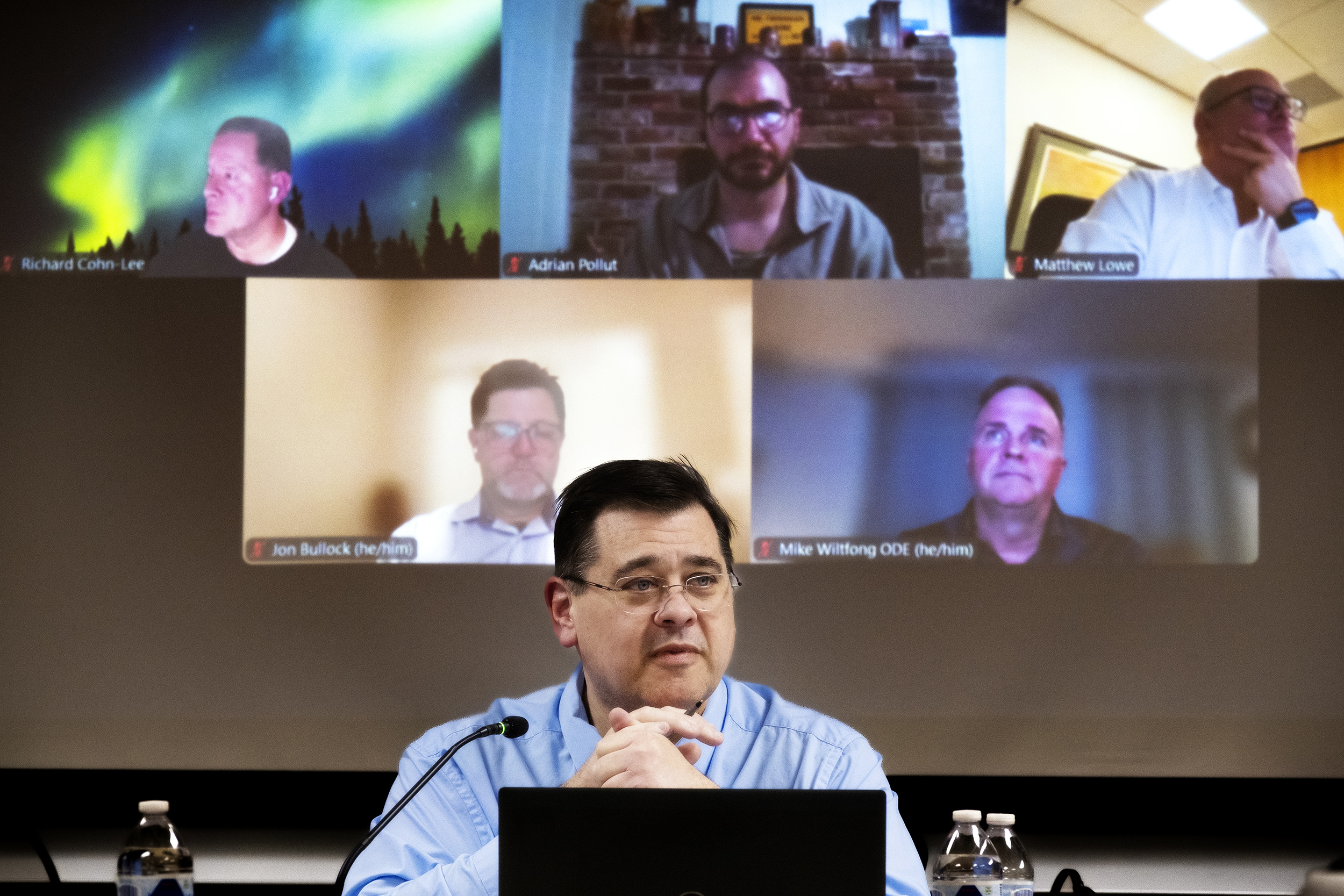
Grzeskowiak believes the district needs to discuss the possibility of moving students into two buildings rather than the current three.
The defeated bond issue proposed a new and larger high school. The pitch was to replace an aging out-of-date school, and that a larger building would allow for moderate growth in the coming decades.
But it turns out that another reason to build a new and larger high school is to be prepared for this other possibility. If the school district grows, then a larger high school is a necessity. But if the district shrinks, that will be true as well. “Eventually the board is going to have to consider consolidation,” and move to a K-6 and 7-12 two-building configuration. And that could be as soon as 2030, he said.
That would likely mean closing the elementary school, remaking the existing middle school as a K-6 and turning the high school into a 7-12 building. A new building, with more classrooms, would make that possible.
WHAT NEXT FOR THE BOND
In May’s election, voters chose overwhelmingly to reject the proposed $139 million bond with nearly 5,000 no votes and just under 3,000 yes votes.
It is unlikely the school board will put a new bond measure on the ballot for this November. There just isn’t enough time, the superintendent said. The board doesn’t meet in July, and has no plans to work on a revised bond over the summer.
“Realistically, to do a thoughtful, careful job, the earliest it should go, in my mind, back to the voters would be May of ’27. Which realistically means that the board should be doing work or have a facilities group do work in like September, October to bring it to the board in November so that they can authorize action in December,” Grzeskowiak said.
That would give the district time to mount a campaign and make the case for whatever the board approves, he said.
What that proposal would be is an unknown. But at the June work session, the board discussed in general terms what a new bond could look like. Board member Adrian Pollut suggested reviewing the options the facilities committee presented last year to see what could be scaled back to lower the cost of a new building. Board member Tamara Cole argued that “just fixing what needs fixing” in the existing building would be cheaper and would have a better chance of passing.
In the end, the decision was to put off any decision about what to decide until the August board meeting, almost certainly putting a new bond ballot measure off until 2027.
THE BUDGET
The board passed a 26-27 budget of $28.25 million at its June meeting. It includes the $2.4 million in cuts that begin the process of eliminating the $4.2 million deficit.
The new charter school is part of the reason for the decline in enrollment. As of July 1, they have enrolled about 80 students for the coming year, with 58 of those coming from the district. That will cost the district just over $500,000 in the coming year.
In response, the district laid off a kindergarten, first-grade, second-grade and third-grade teacher, leaving three teachers per grade rather than the current four.
There will also be cuts at the middle and high school. A full-time teacher teaches six sections during the day, teaching 120 or more students. Fewer students means the class can’t support a full-time teacher.
Band and music, for example, can no longer support two full-time teachers. There are about 60 students in each, so one teacher will now teach band part-time and choir part-time. Looking ahead, it will become more common for teachers to teach multiple subjects and multiple grades, the superintendent said.

The impact on students will be twofold. Fewer class offerings for a given class may mean some students aren’t able to fit that class into their schedule. “Because of scheduling constraints, there’ll be stuff that they can’t get to, or they miss out on,” Grzeskowiak said.
But the primary concern is an increase in class size. “We will have a moderate size increase in classes,” the superintendent said. Class size will increase from the low 20s to the mid 20s, which will mean less time for individualized attention.
Tough financial decisions will continue over the next few years when the school board will need to make additional cuts to eliminate the remaining $1.8 million shortfall.