
ELECTION 2026
To Build or Not to Build
Siuslaw School District voters will decide whether to approve a $139 million bond to build a new high school.
Written and photographed by Will Yurman
CORRECTION: The text has been updated to reflect that Laurel Ferguson’s oldest child is a 3rd-grader, not an 8th-grader as originally written.
David Twombly moved to Florence in 1991. Thirty-five years later, his four children have graduated from the Siuslaw schools, and he has nine grandchildren who are or will be in the school district.
Laurel Ferguson grew up in Florence and graduated from Siuslaw High School in 2004. She has two kids in the schools: a 3rd-grader and a kindergartner, plus a three-year-old Viking-in-waiting.
Twombly, 60, and Ferguson, 40, are both proud Florentinians (Florencians?) Proud of the schools. Proud of their kids.
Where they diverge is over the question of what to do about the problem of the high school.
This May, the Siuslaw School District is asking voters to approve a bond to build a new high school and renovate part of the elementary school.
The 30-year bond measure is for $139 million for a $145 million project. If the measure passes this May, the district would receive a $6 million grant from the Oregon School Capital Improvement Matching Program.
Twombly and Ferguson agree that $139 million is a lot of money. Where they disagree is whether it’s too much money.
Ferguson believes the district needs a new high school. The current building is at the end of its lifespan, and inadequate, she said. Ferguson is the fundraising chair for Citizens for School and Community, the local political action committee supporting the bond. A new school, she said, will bring a host of benefits, fix structural problems, and save future money on maintenance.
Twombly is quick to say he supports public education. He just thinks the bond asks for too much and costs too much. It should be about what we need in a school, not just what we want, he said. “The school that they want to build has everything in it. Things that are absolutely, in my opinion, completely unnecessary,” Twombly said. That includes a dedicated cafeteria and working auditorium, both of which he believes are an extravagance.
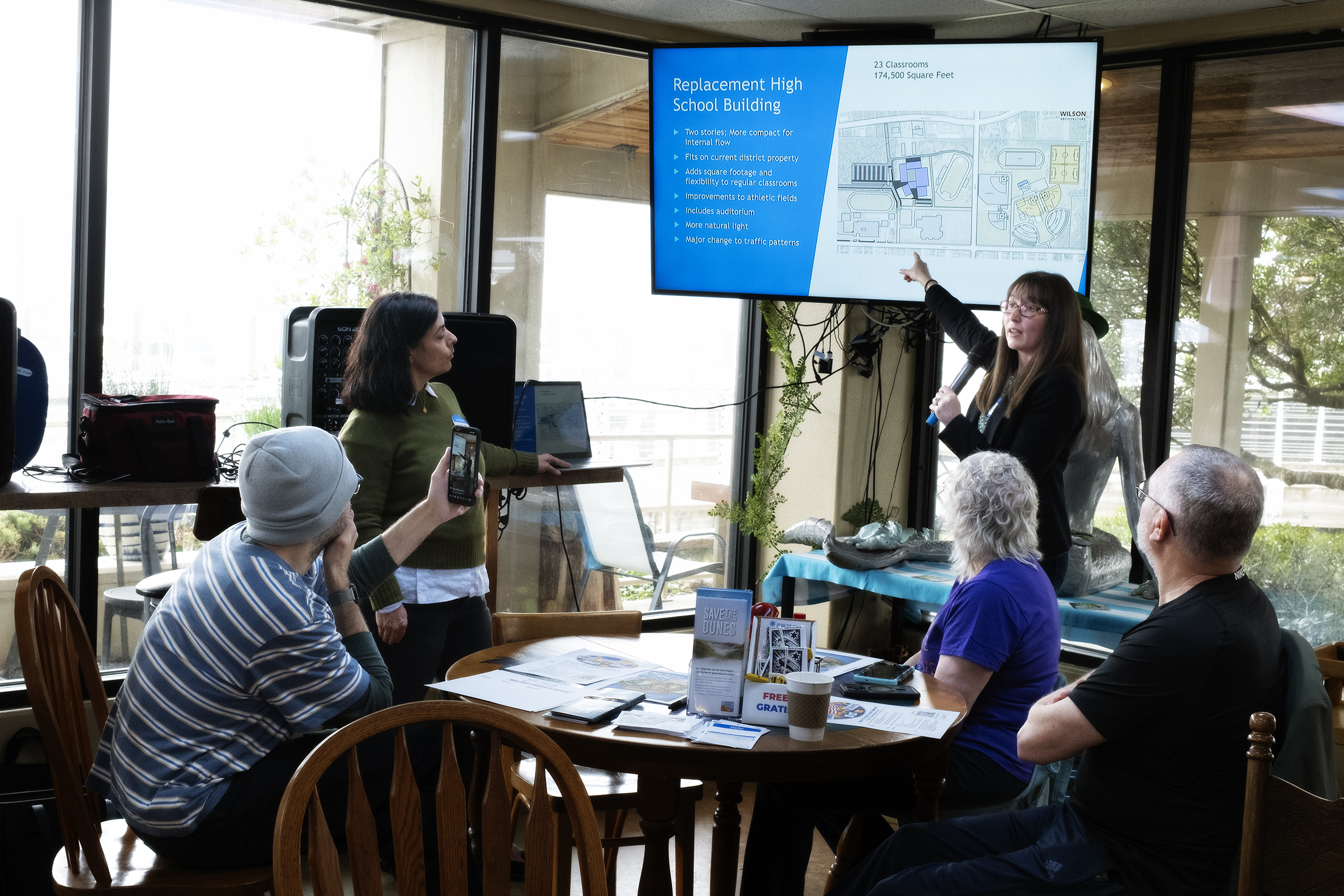
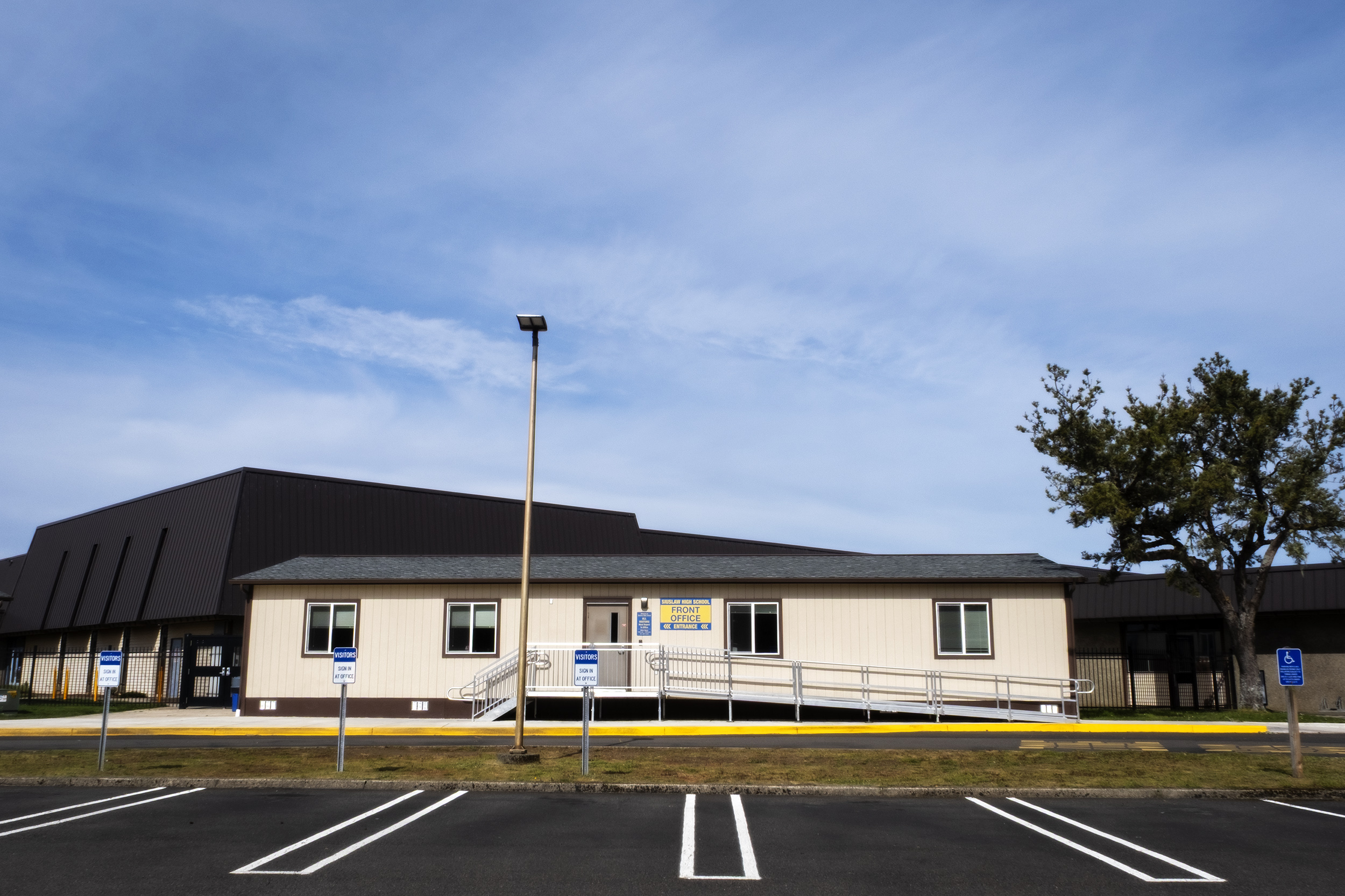
The bulk of the bond would be used to replace the existing high school, built in 1970. A district committee spent more than 18 months studying the high school before putting forward a plan to build a new school that would include structural upgrades and improvements such as a cafeteria, auditorium, and larger classrooms. The new building would also meet seismic codes, which didn’t exist in 1970. A list of the upgrades and improvements that a new school would bring and are listed on the SiuslawSchoolBond.com website. More window light, a dependable heating and cooling system, updated science labs, and a more secure building are on the list.

About $13 million of the bond would be spent to renovate the oldest section of the elementary school, adding four classrooms to that building and eliminating the need for separate modular classrooms for the kindergartners.
Two previous bond measures, one in 2016 and the other in 2018, were rejected by voters.
THE PROS
Supporters argue it is past time to replace the high school. They point to structural problems around seismic safety and an aging heating and cooling system that failed in December of 2024, shutting the school down for four days.
The current high school accounts for 40% of the district’s entire maintenance budget. Classrooms are undersized for modern teaching methods, and several of the existing building’s classrooms were not designed for that purpose. The new building would add several classrooms, preparing the school for moderate growth in the coming decades.
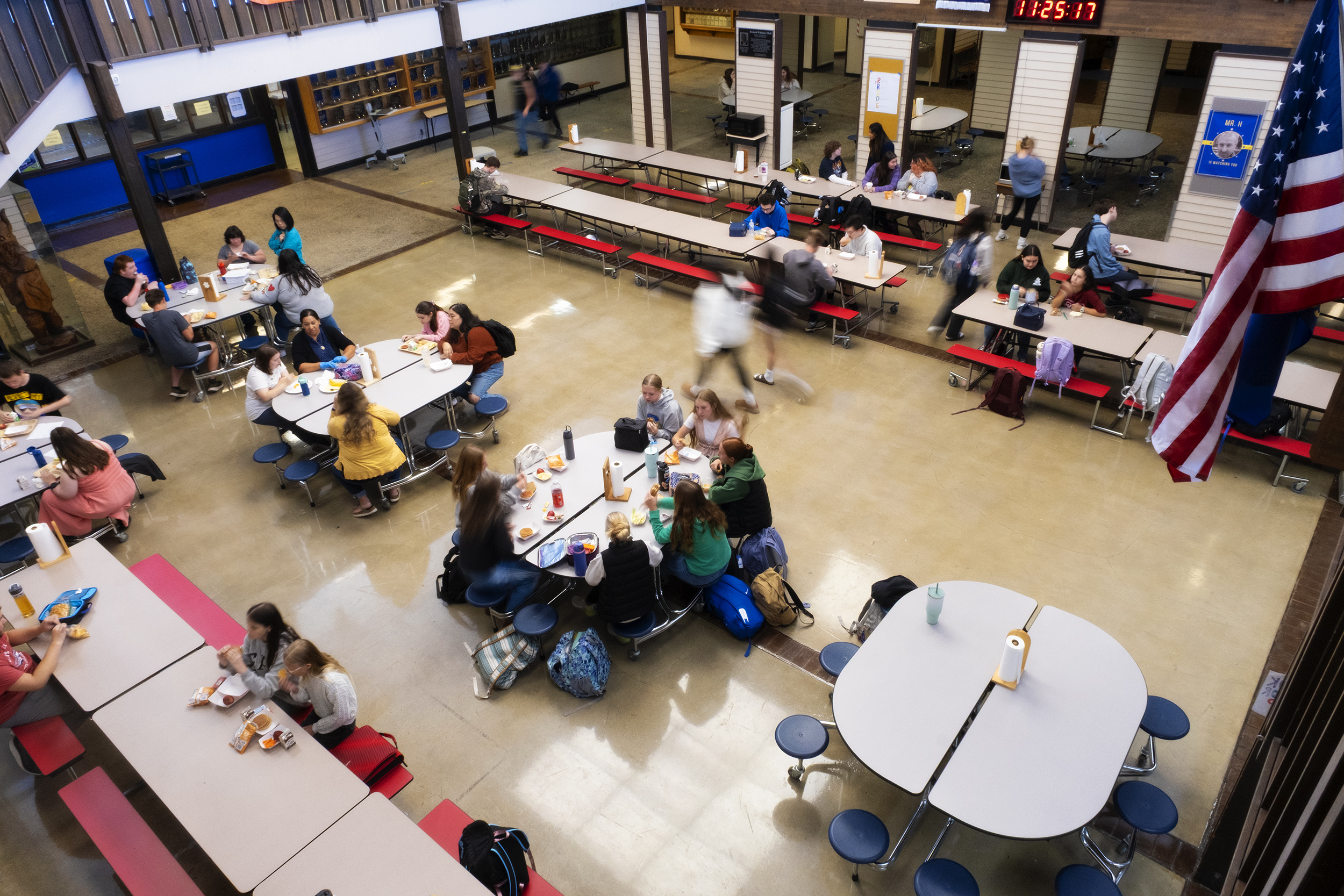
The lack of a dedicated cafeteria,which pushes most students off campus for lunch, contributes to attendance problems, high school principal Mike Harklerode said.
THE CONS
David Twombly is a life-long Oregonian. “I came down here after I got out of the army because I was trying to figure out where I was going in life. And then I just never left,” he said. “I love Florence, I owe my life to Florence. I mean, I have no qualms about how much I respect even the people that are promoting the school.”
In his view, the bond proposal is about wants, not needs. The proposed project costs too much and isn’t necessary, he said.
“We don’t need a new auditorium. We don’t need a cafeteria.” The district should fix the existing school. Replace the heating and cooling system, do the necessary seismic retrofitting, plumbing and electrical repairs and clean the place up. You can have a perfectly functional school for significantly less money, he said.
Based on conversations he’s had with engineers and architects he knows, who he admits haven’t had the opportunity to do a detailed analysis, he thinks $40 million is more than enough to fix up the existing building.
Advocates for the bond disagree. “Most of the building systems are getting close to their useful lifespan,” Curt Wilson said. Wilson is a Eugene-based architect and consultant on the facilities committee’s deliberations. He worked with a team of engineers to study the existing school.
He doesn’t believe $40 million would be enough to fix the current problems and address the needs of the school into the future. “You know, 40 million is certainly a significant amount of money. But is it going to address the multitude of new needs that the school has? I don’t think so. And is it really going to position the building well for the future? I don’t think so as well,” Wilson said.
THE VIBES
Some of the arguments for or against are difficult to quantify. Does a brand new building draw people to Florence? Will it raise student performance? Is it worth the money?
Advocates say it’s a signal of the community’s commitment. They believe it will make the town more appealing to families considering the move to Florence. They point to stories of medical professionals leaving the area in part because of the school.
Twombly thinks it’s ridiculous that someone would move here for a building. Fix the low test scores — that’s what people are looking for. And the cost of the bond is more likely to drive people away than bring them here.
A new auditorium will give students a place to rehearse, and perform. The auditorium would allow for school-wide speakers and assemblies, something that is impossible in the current building, Principal Harklerode said. Larger classrooms are better for teaching, and a cafeteria and kitchen will keep students on campus.
Twombly says the school has worked for 50 years. Fix it up, and it can continue to function.
There is research that shows investments in the physical space of a school can raise test scores, and that the impact is greatest in poorer school districts.
A 2024 study by the National Bureau of Economic Research reported that HVAC, safety and health improvements, STEM equipment, infrastructure, and classroom space are the expenditures that increase student performance. “The positive impacts of bond authorization on both test scores and house prices are concentrated in districts with a large share of low socio-economic status (SES) or minority (black and Hispanic) students,” the study’s researchers wrote.
THE COST
The $139 million bond will cost taxpayers in the district $2.75 per $1000 of assessed value on their property, of which about 6.8% would be for the auditorium. That could cost residents in even a moderate home more than $500 a year.

For Pat Burke, 79, a Florence-area retiree, this will be an easy choice to make. Burke and her husband live on a fixed income, primarily from Social Security. And the bond will cost them about $1,000 a year, she said.
But she is a firm believer in education and is convinced the students need a new school. “So we are going to find the money if the bond passes. And I so sincerely hope it does,“ Burke said.
“We are both can-do people, and if it means going to Grocery Outlet and buying everything that has a green sticker on it because it’s $2 off. We’ll do it.”
- Election Ballots will be mailed to eligible voters beginning April 30th.
- Completed ballots must be postmarked on or before May 19th, or dropped off in an official drop box no later than 8 p.m. on May 19.
- Florence’s drop box is in front of the police station at 900 Greenwood St in Florence.
- If the bond is approved, the money can be used only for the construction project. Funds cannot be used to pay for day-to-day operations at the school. And they cannot be used to support or fund the charter school.