
ELECTION 2026
Filling Boomer’s Shoes
Two Republicans and one Democrat are running to replace State Representative Boomer Wright in Oregon’s State House
Written and photographed by Will Yurman
Oregon state Representative Boomer Wright is not running for reelection this year, and that leaves an open seat in Oregon’s State House District 9. Two Republicans, Troy Cribbins and Claire Lynn, will compete in May’s primary for the opportunity to run in November’s general election against Democrat John Scheirman, who is running unopposed in the primary.
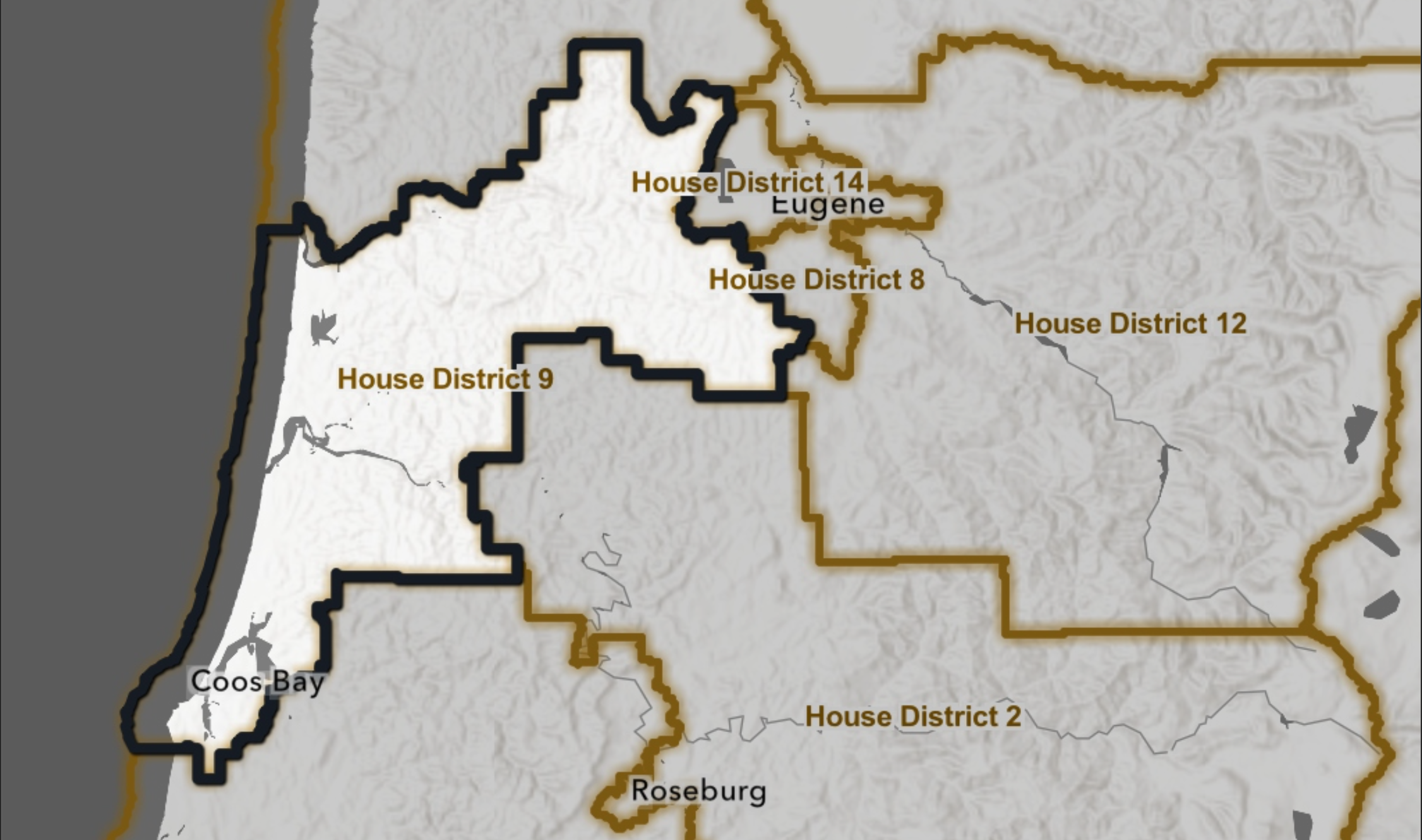
District 9 runs along the central coast from just north of Florence to just south of Coos Bay.
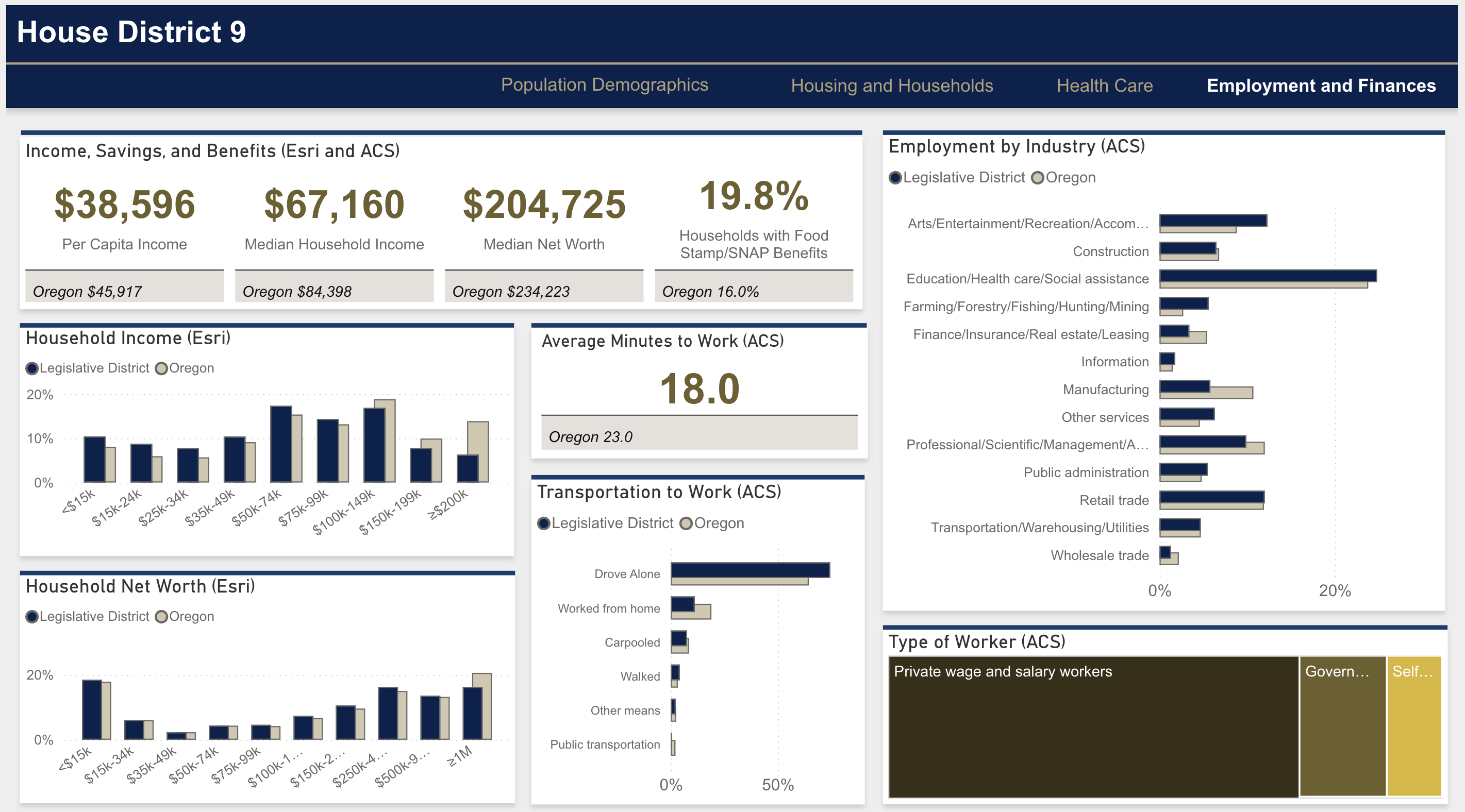
The rural district skews older and poorer than the rest of the state. The average age in District 9 is around 51, about 10 years higher than the state average. The typical household income is 20% lower. The data comes from the state legislature’s “Oregon Legislative District Fast Facts” website.
The district has an affordable housing shortage, limited access to health care, and not enough good-paying jobs, Representative Wright said in an interview in late March. But, as he’s fond of saying, “Whatever happens is always better at the beach.”
Republicans Cribbins and Lynn share many of the same concerns as they look to fill Wright’s shoes in Salem. Both support smaller government, lower taxes, and a relaxation of regulations that they say hinder the growth of local businesses.
DEMOCRAT JOHN SCHEIRMAN
Democrat John Scheirman identified his top three priorities in a phone interview in early March. He supports a family wage, where “one job can support a family,” access to quality health care, and education. Scheirman said he plans to have a campaign website up and running and begin campaigning in earnest in May.
Lynn, in a March 18 email, wrote that she would not be available for an interview until after the primary. But on the Hooked On Oregon Radio Show, she said she felt prepared for the job in part because of her experience working in the state legislature. Her website indicates she is currently doing policy work in the Oregon House Republican Office. “I know how policies are drafted. I know how the amendment process works and have the relationships,” she said on the podcast.
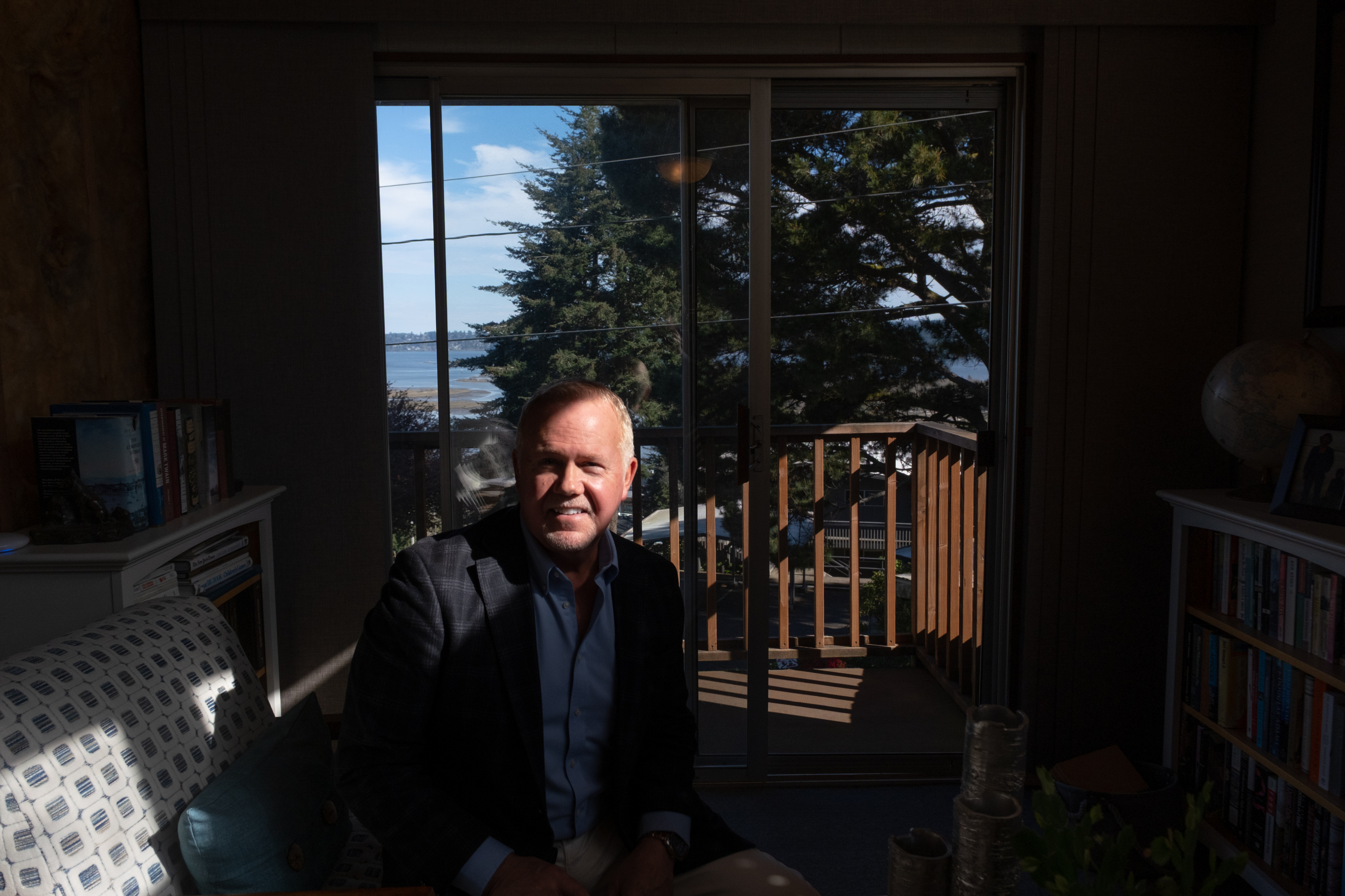
When Troy Cribbins was young, he would visit his grandparents every summer in Myrtle, Oregon. “They were my heroes. They were stable. They were always there,” he said during an interview at his home in Coos Bay.
His grandfather worked multiple jobs; he split cedar rails for fences, owned his own log truck, and had a grocery store. The work ethic shaped Cribbins’ world view.
Cribbins is the administrator of Pacific Home Health & Hospice, a home health agency. He’s worked in health care for decades and is a Coos Bay city councilor. He describes himself as a pragmatic believer in the free market system, drawing on his experience as a small business owner and the dual tug of his “stable” grandfather, an alcoholic father and a mother who would struggle as a single parent after divorcing Cribbins’ dad. Experiences that have left him understanding a need for social safety nets, even as he believes in the power of the private sector and a desire for smaller government.
“What I would like to do is see a much smaller, much more efficient government and let the private market do as much as they could,” Cribbins said. “I think we try to be everything for everyone. And I just don’t know that that’s financially sustainable.”
“I am frustrated with waking up in the middle of my community and seeing all the potential that’s here and the devastating effects that the overburdensome regulatory and taxing policies have had on our community.”
His priorities, if elected, include changing land-use policies and eliminating or at least modifying the Corporate Activity Tax (CAT) established by the state in 2020 as an additional tax on commercial income over $1 million.
He sees CAT as anti-growth, punishing companies that become successful, rather than allowing them to grow and create more jobs. “I know people don’t like the trickle-down theory, but that’s my theory,” Cribbins said. Lower taxes allow businesses to grow, which leads to more jobs, and then those people can afford to buy homes and support local businesses, and so on.
He believes overregulation has become a barrier to allowing for good stewardship of the land. “I’ve read the land use policies. I look at it and go, well, that’s true. Yeah, I want clean water, I want this cleaner. I want all that stuff too. But if an industry or an entity comes in and they check those boxes for what’s there, that should be enough. That’s what we designed. You met these requirements, check. You met these requirements, check. Move the project forward,” he said. A streamlined system would allow for large-scale economic development, including the Pacific Coast Intermodal Port project proposed for Coos Bay.
“I would argue that the people that live in these communities, the timber community, the fishing community, the small business community, they are the best stewards of these resources,” he said.
He also wants to improve access to health care in the rural communities of District 9 and find ways to improve Oregon’s public education system. “We can’t be one of the highest spenders of education in the country and have our results be among the poorest,” Cribbins said.
CLAIRE LYNN
Lynn’s website describes her as a “7th generation Oregonian and a proud Siuslaw High School graduate.” She has worked for the city of Florence, attended Oregon State University, and worked in the Oregon State Legislature and in government in Washington, D.C., all according to her website.
Lynn’s website lists the high cost of living, lack of jobs, public safety and education as some of her top priorities. According to the website, she would “address Oregon’s Corporate Activities Tax,” abolish the state’s clean fuels program and believes the state should remove its estate tax. She also supports increasing the harvest levels on national forests in Oregon, and, if possible, on state forest land as well. This money, the website reads, could be used to pay for services such as sheriff departments in rural communities.
Wright has endorsed Lynn. He has known Lynn’s family for decades. He worked with her grandmother, Kay King, in the Siuslaw school district. “I watched Claire grow up in Florence and be a phenomenal young lady,” he said of Lynn. “She knows the game, and there is a game, and there is a way in which you have to build things. You have to build trust, you have to build relationships, and all those things are important. And she’s already done that.”
“Troy’s a nice guy,” Wright said of Cribbins. He acknowledged Cribbins’ experience in the health care industry, but “I just know Claire much better,” he said.
Cribbins described Lynn as “super bright” and is sure she will be successful in the future, but he believes his decades of experience in health care and running his own business make him the best candidate in this moment.
Lynn has an insider’s perspective from her time working for the legislature, while he brings an outsider perspective, Cribbins said.
At a Republican candidates’ debate in Coos Bay in early March, during a round of “rapid-fire” questions from the debate moderator, Lynn and Cribbs agreed on most issues. They both support gun rights, would repeal House Bill 3115, which limits a city or town’s ability in Oregon to restrict where someone can sleep or sit, and would fully support the federal government’s efforts to arrest undocumented immigrants.
They differed on two issues. Lynn described herself as proudly pro-life, while Cribbins said he was personally opposed to abortion and would support limits on access, but it was, he said, an issue best left to the woman.
They also disagreed on mail-in ballots. Cribbins said he would not support eliminating them. Lynn didn’t directly answer the question, but said she supported showing an ID to vote.
For Cribbins or Lynn, winning would almost certainly mean being in the minority. The Oregon State House is dominated by Democrats. Wright, who will have served in the minority for six years when he steps down next January, sees an important role for Republicans in the House. “I think we’re the brakes. You know, as the train heads down the road, we are the brakes that slow things down to take a look at what’s happening,” he said.
Cribbins also acknowledges the reality that he will be in the minority party.
“You’ve got to be in the building. You can’t do anything if you’re not there having the conversations. And I think the conversations need to be centered around practical solutions. At the end of the day, you’ve got to deal with what you have, and you’ve got to work to make the best product,” Cribbins said.
“But when you govern at the state level, at any level, you’re governing for everyone.
It’s not just the people that think like you do. You have to govern for everyone.”
- Election Ballots will be mailed to eligible voters beginning April 30th.
- Completed ballots must be postmarked on or before May 19th, or dropped off in an official drop box no later than 8 p.m. on May 19.
- Florence’s drop box is in front of the police station at 900 Greenwood St in Florence.